
Shutterstock ‘social’
Searching for ‘social’ on Shutterstock yields almost exclusively social media images…
Comments Off
Searching for ‘social’ on Shutterstock yields almost exclusively social media images…
I thought that an interesting (if not terribly novel) way into online communities would be to look at the top ten Google results for ‘community’. The first nine in my search were pretty unremarkable, but this was number ten. What interested me was that it was the least communal website I could imagine without the link actually being dead. There is only one hyperlink on the site, which is highly tangental, and ‘Contact Us’ is simply an email address. The rest is cursory information about ‘community’ in general, the point of which seems to have been lost in the sands of time.
So I decided to sift the sands of time with the wayback machine.
 It looks like this site started out as ‘CommUnity: the computer communicators’ association‘, which we can see from the 1996 home page. It was last updated in 1999, and in 2005 the domain was put up for sale. It appears to have been acquired in 2010, and has remained the same–except for the addition of the aforementioned hyperlink–since then.
What I’d like to know is:
Glass tech plus another mention of the iWatch plus perhaps an emergent community (of Americans with a spare $1500 anyway…)
Not to mention Corningpocalypse Now!
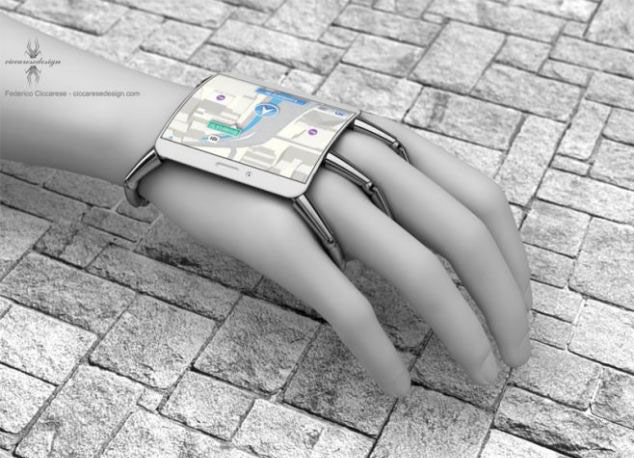 This is the Guardian’s third article on the as-yet-unseen, probably-might-exist-sometime iWatch. They’ve also published pictures of what it might look like.
I was thinking about the two senses that the digital can currently reach, and the other three that it can’t. Smell and taste are pretty much ignored, and touch, although made the most of in the naming of various tablet devices, is conspicuous only in how it relates to visuals and sound…the actual touch sensation is always the same. Even in the corporate videos last week, every digital surface is smooth, and there is no indication that texture is digitised. This is a departure from the VR ideals of 15 years ago, as is the abandonment of touch and taste.
This does reflect a good quantity of analogue art and communication generally; with notable exceptions, even more tactile art like sculpture is usually not meant to be touched, and certainly a dinner or scent may be praised and valued, but isn’t usually meant to signify meaning (prosaic or artistic).
What the Onion expertly demonstrates is that the strangeness of the nose buds is mostly subjective. Why shouldn’t popcorn be the punk of the smell world? Why shouldn’t pine signify the conformity of easy listening?
This article quickly retracts the alarmism of the title and shows how the studies to which it refers conclude that the internet, in tracking our behaviour, is just reflective of societal racism… Not the happiest of findings. In the context of this module, however, it’s interesting that you can still give articles titles like this, that we don’t always trust the tools that we always use, and that the democracy of the internet can betray unpleasant facts about the society it represents.
Is the F pattern shortchanging the author, or is this a literacy that has emerged as a result of the medium?

Is navigating this website really so different from navigating a text brochure? A novel or math book is meant to be experienced in a linear way, but I would argue that someone looking to turn some information into knowledge for their personal use would interact with informational printed text in much the same way as they would do with a website…especially a website that is largely text-based anyway. Moreover, while tabs and ‘breadcrumbs’ make the experience feel less linear than a printed booklet does, they are actually represented in a linear way.

© 2016 Candace's E-learning and Digital Cultures site. All Rights Reserved.
Powered by WordPress. Designed by 
Recent Comments